
A Button for the Reader, a Label for the Author
How Substack described one product problem and solved a completely different one


Socrates was against writing. He argued that people would stop remembering things, start confusing what's written down with what's understood, and go around confidently repeating other people's words they don't actually get.
We know this because his student Plato wrote it all down.
Every new technology goes through this in some form. First a new tool shows up. People start using it in ways somebody doesn't like. Then that somebody categorically declares the tool has destroyed the soul, thinking, culture, and possibly a couple of children.
To be fair, Socrates wasn't exactly wrong. Writing really did change memory and how we think (and possibly our soul and a couple of children). Google really does let you assemble a confident opinion in five minutes on a subject you know nothing about (which is where all the foreign policy experts come from — though this past month they've been forced to be experts on football rules instead). And AI, goddammit, really does crank out gigantic amounts of ass-ugly slop content without a single living thought in it, and that is a problem.
But from the fact that people use a new tool in not-very-ethical ways, it does not follow that the tool's presence in an activity IS the unethical part. This is pretty basic logic. If all cars are red, it doesn't mean everything red is a car.
And here Substack pulls off a beautiful sleight of hand.
In their post they describe the problem really well, beautifully even: the internet is filling up with texts that have no human behind them. Correct texts, well-structured, with three to five takeaways, heroes who go through an arc, then go through the arc one more time, and a moral you can't argue with. Nobody particularly thought about these texts, and nobody is particularly going to read them.
And then Substack announces a partnership with Pangram — a tool that detects whether AI participated in writing a text.
See it? The post was about the absence of a human. The feature is somehow about the presence of a tool.
I read the comments under the post, and things got even better pretty fast. People who honestly said they use AI for editing, for research, or just because English isn't their native language, got interrogated like it's the Gestapo: then why do you write at all? Where's your real voice? What right do you have to call yourself an author?
Substack says a disclaimer will solve everything. Sure. First they pin a yellow star on you... oh sorry, my bad, a neutral informational label. After that you're welcome to write an explanatory note.
And meanwhile one person gets the AI brand for running their text through Claude to fix the commas. Another takes a text straight out of Claude, deletes the word "delve" and 7 em-dashes, and receives a certificate of genuine organic humanity.
The part that offends me most about this decision: it's exactly as morally lazy as using Claude to generate your content start to finish.
Substack doesn't want to dig into why the platform's algorithm rewards eight Notes a day, banality, confident tone, and the endless re-chewing of the same three thoughts. Because that would mean changing incentives. That's hard, expensive, and might hurt engagement.
Much easier to give the reader a button and the author a label.
So yes, I agree that human authorship is worth protecting. It's just not defined by the absence of AI.
It's defined by the presence of a human who saw something, felt something, understood something, chose, rejected. And is now willing to answer for it.
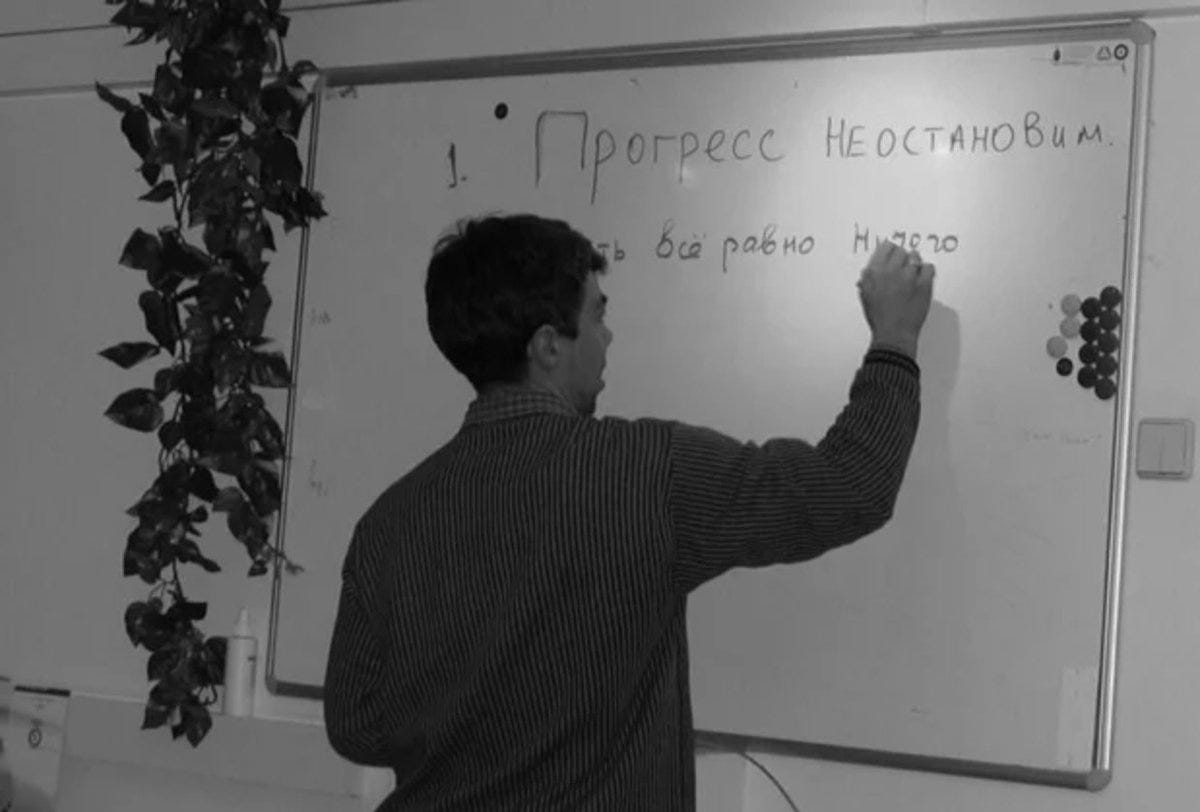
As Ilya Segalovich used to say: progress is unstoppable, nothing's going to work anyway.
Thank you Valentina, I really enjoyed reading this . :)
Love this: The post was about the absence of a human. The feature is somehow about the presence of a tool.